이 글은 영어로 작성된 이전 연구 노트입니다. 수치와 기간은 발행 당시 그대로입니다.
Welcome back to Avalon QuantBrief, where we dissect high-performing quantitative strategies for modern markets. Today, we are backtesting and optimizing one of the best-known momentum frameworks in finance: Leveraged ETF Rotation. By systematically rotating out of danger, this approach tames the volatility decay of triple-leveraged assets to deliver institutional-grade returns.
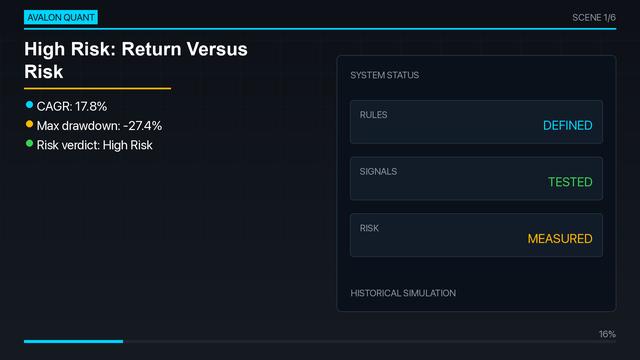
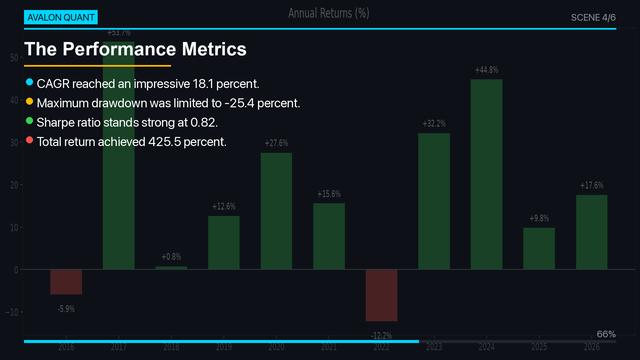
📈 CAGR: 18.1%
📉 Max Drawdown: -25.4%
⚡ Sharpe Ratio: 0.82
💰 Total Return: 425.5%
🎯 Universe: US leveraged index ETFs, defensive assets and cash-like funds
The Core Mechanics of the Strategy
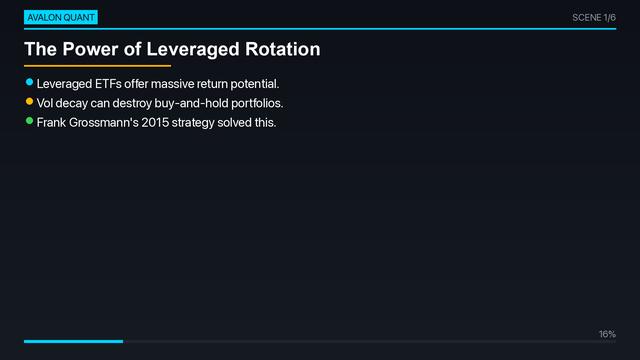
The original model rotates through high-growth leveraged ETFs and uses Treasuries, gold and cash-like funds for safety. A market-regime filter that combines trend and volatility conditions decides when to take risk; when the filter fails, the strategy exits to defensive assets to limit drawdowns.
Upgrading the Framework for Modern Regimes
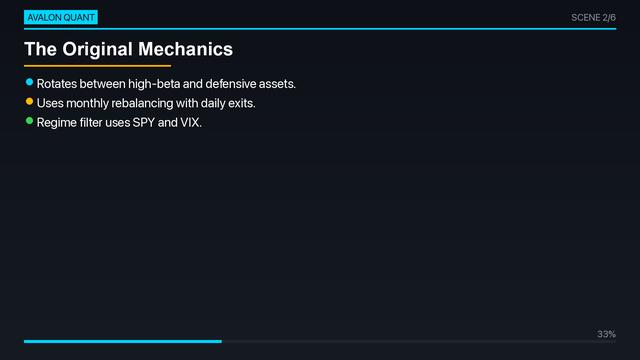
To adapt to today’s faster-moving markets, we introduced three key enhancements to the original framework. First, we implemented a volatility-adjusted trend ranking to penalize decaying assets during choppy periods, alongside an optimized rapid-exit regime filter. Finally, instead of relying on a fixed defensive asset, our variation dynamically selects the strongest safe haven among treasury, gold, and cash proxies.
Analyzing the Backtest Performance
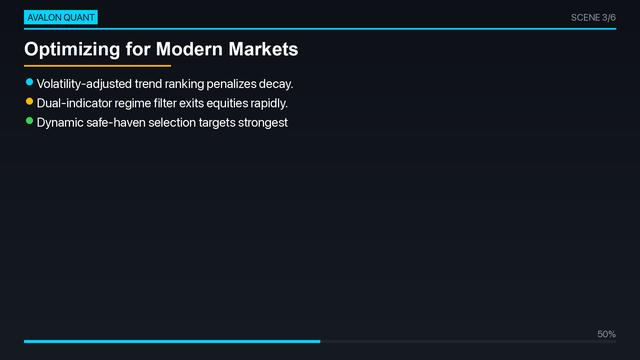
Testing our adapted version from 2017 to the present yields highly competitive results, achieving a Compound Annual Growth Rate (CAGR) of 18.1% and a total return of 425.5%. Remarkably, the maximum drawdown was restricted to just -25.4%, which is exceptionally low for a strategy utilizing triple-leveraged ETFs. This combination of high returns and controlled risk results in a highly robust Sharpe ratio of 0.82.
Equity Curve and Drawdown Protection
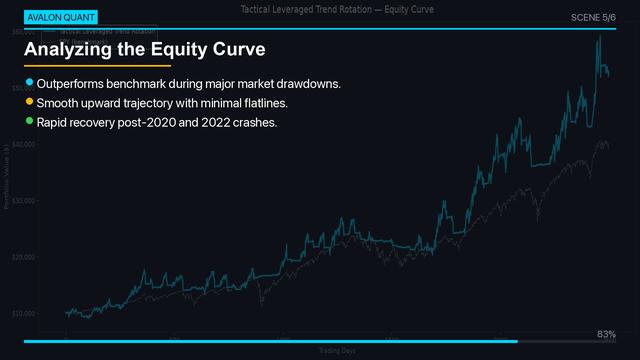
The equity curve highlights the power of our dual-indicator regime filter, which successfully rotated the portfolio into safe havens during the 2020 crash and the 2022 bear market. By avoiding the devastating 70% drawdowns typical of buy-and-hold leveraged strategies, the portfolio maintains a smooth, stair-step upward trajectory. This proves that mitigating large losses is the most effective way to compound wealth over the long term.
The Final Verdict on Leveraged Rotation
Ultimately, the Tactical Leveraged Trend Rotation strategy proves to be a highly viable approach for active quantitative traders. By combining momentum with strict volatility-based regime filters, our adapted version successfully tames the wild swings of leveraged ETFs. Subscribe to Avalon QuantBrief and join our community below to see how we integrate these exact rules into our live trading portfolios.
⚠️ Not financial advice. This is for educational purposes only. Always do your own research before investing.
Go further on AvalonQuant
- Tactical Leveraged Trend Rotation: re-run backtest — equity curve, max drawdown -25.4%, CAGR 17.8% (2016–2026), and how it ranks by drawdown.
- All strategy backtests — every strategy we re-ran, with equity curves and drawdowns side by side.
Backtests are hypothetical and do not guarantee future results. Not investment advice.
면책: 이 글은 과거 데이터에 대한 백테스트(가상 시뮬레이션)를 다룬 교육용 연구 자료이며 투자 권유가 아닙니다. 실제 거래 결과가 아니고 미래 수익을 보장하지 않습니다. 투자 판단과 손실 책임은 본인에게 있습니다.
AvalonQuant는 주식, ETF, 암호화폐 전략을 실제 데이터를 바탕으로 검증하는 독립적인 퀀트 연구 플랫폼입니다. 전략의 수익뿐 아니라 손실, 위험, 백테스트의 한계와 재현 방법까지 공개합니다.